
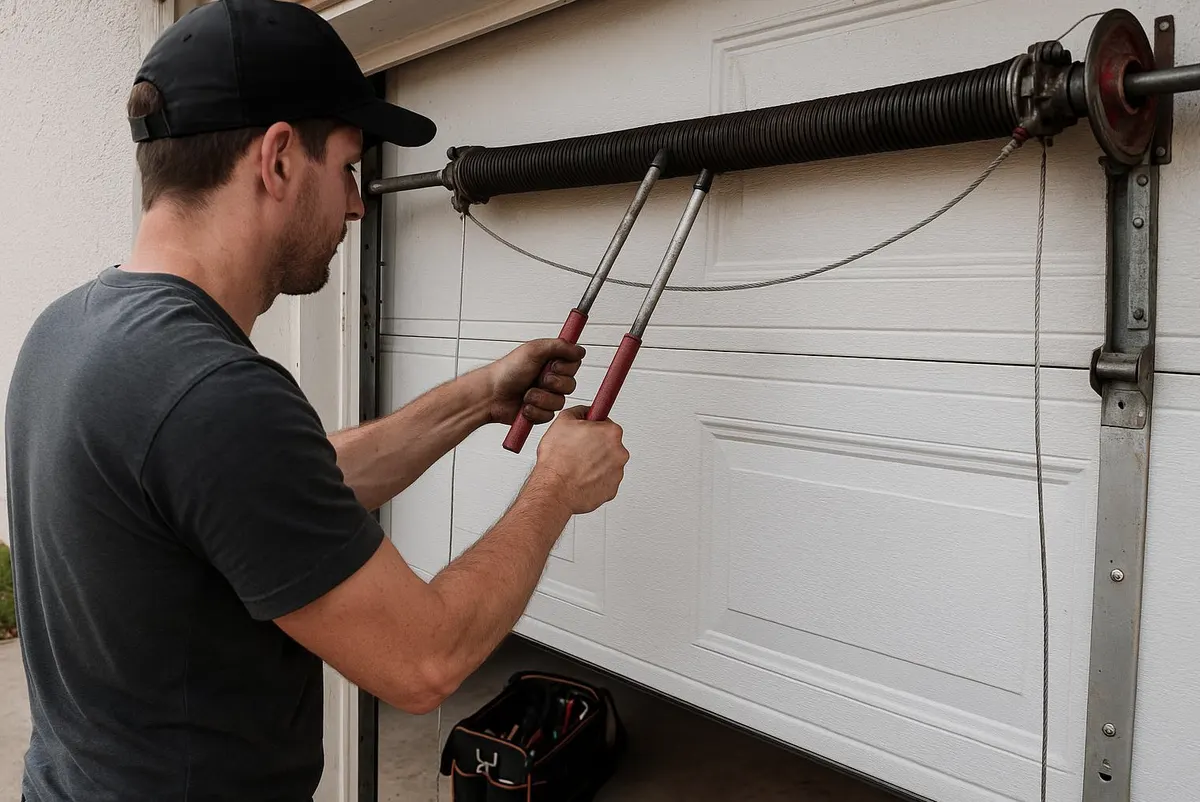
What a Technician Sees on a Typical Fall Call
Right about now, the calls start sounding the same. A homeowner notices the door is suddenly louder, or it hesitates halfway up, or there's a thin crust of white residue along the bottom panel from last winter's road salt that never got cleaned off. On inspection, it's usually a mix of small things: weatherstripping that's gone stiff and cracked, hinges and rollers that haven't seen lubricant since spring, and a torsion spring that's lost just enough tension that the opener is straining to compensate. None of it is dramatic on its own, but stacked together, it's exactly the kind of wear that turns into a no-start morning once temperatures drop into the teens and twenties.
Why This Part of Ohio Is Hard on Garage Doors
Garage doors in Canfield, Boardman, Poland, and the rest of Mahoning County deal with a rougher cycle than doors in milder climates. Summers here are humid, which swells wood trim and can gum up tracks with dust and grime. Then the seasonal swing hits fast: cold winters bring ice, road salt, and repeated freeze-thaw cycles that are tough on seals, metal hardware, and springs. Salt spray kicked up from the driveway and street corrodes exposed metal over time, and ice buildup at the bottom of the door can freeze the weatherstripping right to the concrete overnight. A door that was closing smoothly in September can feel like a completely different door by January if it wasn't prepped.
The Fall Checklist Before the First Hard Freeze
1. Replace or Reseal the Weatherstripping
The rubber seal along the bottom of the door is the first line of defense against cold air, melting snow, and road salt runoff. If it's cracked, flattened, or pulling away from the track, cold air and moisture will find their way in no matter how well-insulated the rest of the door is. This is an inexpensive fix, and doing it now — before the first freeze sets the old seal stiff against the concrete — makes the job a lot easier.
2. Lubricate Rollers, Hinges, and Tracks
Use a silicone-based or lithium-based garage door lubricant, not a heavy grease, on rollers, hinges, and the track itself. Avoid WD-40 for this purpose; it's fine for displacing moisture but doesn't hold up as a long-term lubricant in cold weather. A properly lubricated door runs quieter and puts less strain on the opener when metal parts contract in low temperatures.
3. Check the Balance
With the opener disconnected, lift the door manually about halfway. It should stay in place on its own. If it drifts down or shoots up, the spring tension is off, and the opener is doing extra work every time it runs. In cold weather, metal springs lose a bit of flexibility, which can expose a borderline spring that was just barely getting by in warmer months. A door that's out of balance now is more likely to leave you with a broken spring on a sub-freezing morning.
4. Clear and Inspect the Sensors
The two photo-eye sensors near the bottom of the track openings are small, but they're sensitive to dust, cobwebs, and misalignment. Wipe the lenses clean and make sure both sensors are pointed directly at each other. A sensor knocked slightly out of alignment during a summer storm season can cause the door to reverse unexpectedly or refuse to close, which is a bigger headache once it's dark by 6 p.m. and you're standing outside in the cold troubleshooting it.
5. Look at Insulation, Especially for Attached Garages
If the garage shares a wall with living space, an insulated door panel can make a real difference in heating costs and in how cold that shared wall gets. Even for a detached garage, insulation helps keep stored paint, tools, and vehicles from dealing with the full swing of winter temperatures. This isn't a job every homeowner needs, but it's worth evaluating if the garage door is original to an older home in the area.
Don't Overlook the Opener
Openers work harder in the cold. Chain and belt drives both tighten up slightly as temperatures drop, and if the chain is already loose or the belt is worn, winter is when that slack becomes obvious as banging or slapping noises. If the opener has a battery backup, check it now. Battery performance drops significantly in cold weather, and a backup that was fine in summer testing may not have enough reserve to open the door during a winter power outage caused by an ice storm. Also take a second to test the manual release cord — if the opener ever fails on a frozen morning, you'll want to know that the manual disconnect actually works before you're relying on it in a hurry.
When to Call Canfield Garage Door
Some of this is reasonable to handle yourself — lubrication, a visual weatherstripping check, wiping down sensors. But if the balance test shows the door isn't holding position, if you hear grinding or popping from the spring area, or if the opener is straining and reversing on its own, those are signs worth having a technician look at before winter sets in. Canfield Garage Door handles spring replacement and garage door opener repair across Canfield, Boardman, Poland, Austintown, and the surrounding Mahoning Valley communities, and a fall tune-up visit typically covers a balance check, hardware inspection, and lubrication in one trip — the kind of service that catches a weak spring or worn roller before it fails on an ice-cold morning instead of after.
If your garage door has been louder, slower, or just feels off heading into the cold months, don't wait for it to fail on the coldest day of the year. Call Canfield Garage Door today to schedule a fall inspection and keep your door — and your garage — ready for whatever this Ohio winter brings.